

Shenzhen Zhihua Chemical Co.,Ltd
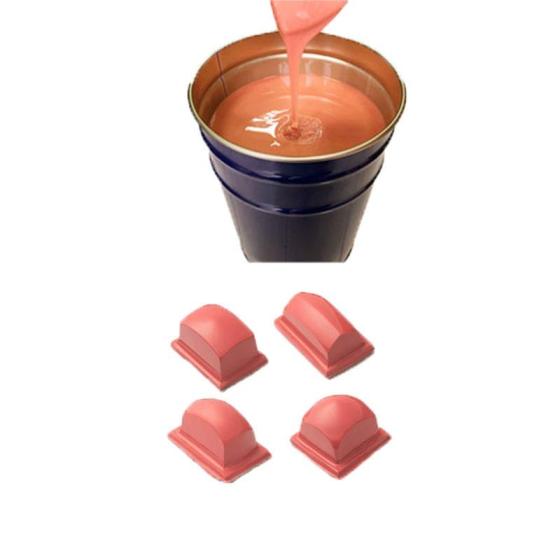
RTV2 Silicone Rubber for Pad Printing – Ceramic Pattern Transfer Solution
RTV2 silicone rubber is formulated for pad printing ceramic patterns with high transfer accuracy and durability. Ideal for tableware and decorative ceramics, it ensures sharp detail and consistent ink release.
Product description
Technical Parameters
|
Model |
Color |
Mixing ratio (%) |
Pot life (mins, under 25℃) |
Curing time (hrs,under 25℃ ) |
Hardness ( Shore A ) |
Tensile- strength (MPa) |
Tear- strength (kN/m) |
Viscosity (After A/B mixed ,mPa.s) |
Shrinkage rate (%) |
Elongation (%) |
|
DC-P25 |
Red Yellow white |
2-3 |
30-40 |
4-5 |
25±2 |
5.2±0.3
|
30±2
|
35000±2000
|
≤0.3% |
≧700% |
Characteristics
*good printing effects
*good quality
*good resilience
*and without any impurity.
Operation instructions
Step 1:
prepare all the tools like the pad mold, a cup for mixing, and a glass stick. Clean the pad mould with detergent, and dry the pad mould with an air-gun or cloth, then brush a lay of mold release agent.
Step 2:
Generally, the ratio of pad printing silicon rubber and the silicon oil depends on the size of pattern which customer needs to print. The larger the pattern is, the softer the printing pad should be, and more silicon oil needs to add. Contrarily, if a silicon pad with high hardness needed, silicon oil should be added less or none. General hardness of the printing pad is 15A°~-25 A°. If too much silicon oil added in the silicon rubber, the printing pad will be too soft, and this will limit the printing times. For silicon oil will destroy the molecular chain of the silicon rubber, no matter how supreme quality the silicon rubber is. And therefore, the printing pad will be abrasion intolerant and solvent intolerant and easy ageing.
Step 3:
General mixing proportion is as follows: add 30g silicon oil into 100g silicon then hardness of 20A° printing pad we get, which is suitable for the pad printing for alloy car and other products with small patterns and contact areas. If a big contact surface or a soft silicon pad needed, the mixing proportion between the silicon and the silicon oil can be no more than100:40(means we suggest you do not add silicone oil more than 30% base on totally quantity). But please note that the more silicone oil added. the softer the silicon pad will be, which will also reduce printing times, abrasion resistance and solvent resistance. Therefore, cost increase and material waste will occur.
Step 4:
Relation between the amount of the curing agent added and the chemical reaction of the silicon is as follows: mix 100g silicon and 30g silicon oil sufficiently and evenly, then add the curing agent which is 2%-3% of the total weight of the silicon and the silicon oil, keep stirring for 2-3 minutes, and then deair to remove the air bubbles. It is better to finish deair within 10 minutes. For if it takes too long, it may cause fast curing and affect the quality of the printing pad.
Package
25KG/drum vacuum packing for part A +1kg/ bottle catalyst for part B
Shelf life
1. Twelve(12) months when stored under dry and cool place by original package under 25℃
Product Specifications
- Product Date 2026
- Delivery cycle within 1 month
- Customize Support
- Price Quotation
- Exit Support
- OEM Quotation
- Supplier Shenzhen Zhihua Chemical Co.,Ltd
- Delivery Method Land transport/Ocean transport, etc.
- User Manual provide
- Shippable Areas Southeast Asia and Global
Procurement Recommendation
RTV2 silicone rubber must offer high transfer fidelity and solvent resistance; ideal for ceramic pad printing—verify viscosity and cure time (for reference only).
Due to market conditions, product updates, and policy changes, please contact the supplier for the latest information.

Feedback & reviews


Related Products
Beam Smoke Detector Fire Alarm System

Comments
PinoyPro2026-04-04
First glance made me think, “Yep, this was the right choice.”
SiamSource2026-04-02
Exactly as pictured—no disappointments!
SuryaTrade2026-04-01
Are packages left at the door if no one is home?