

A Guangzhou-Bogotá firm is demonstrating that the future of cross-border trade lies in controlling both ends of the chain — not just the middle.
The trade relationship between China and Colombia has entered a new phase. In 2026, Colombian imports from China span consumer electronics, industrial inputs, textiles, building materials, and general merchandise — sectors that collectively represent billions of dollars in annual commerce. Yet beneath the impressive headline numbers, a persistent challenge remains: the operational gap between Chinese manufacturing and Colombian market access.
For many Colombian importers, the traditional approach to sourcing from China involves assembling a patchwork of disconnected service providers — a buying agent here, a freight forwarder there, a customs broker in Bogotá, a trucking company for final delivery. This fragmented model works adequately when everything goes according to plan. When it doesn't — and in international trade, disruptions are the norm — accountability vanishes, communication breaks down, and costs spiral.
A growing number of industry observers believe the solution lies not in finding better individual vendors, but in rethinking the entire supply chain structure.
The Case for Dual-Market Presence
BOSS International Supply Chain Co., Limited, headquartered in Guangzhou with a wholly-owned subsidiary in Bogotá, represents one model that is gaining traction. The company's operating philosophy centers on a straightforward premise: to truly serve Colombian importers, you need to have boots on the ground at both ends of the corridor.
In Guangzhou, the team manages factory sourcing, supplier qualification, quality inspection, cargo consolidation, and Chinese export customs declaration. In Bogotá, a separate Colombian team handles import customs clearance under DIAN regulations, local logistics coordination, and final delivery. The two offices operate as a single integrated unit rather than as independent entities connected by email.
This structure is supported by a trilingual workforce — Mandarin, English, and Spanish — that eliminates the communication layer typically required when Chinese manufacturers and Colombian buyers interact across language barriers.
Case Study: From Fragmented Procurement to 30% Cost Reduction
The practical impact of this model becomes clear when examining a specific engagement. A large retail company based in Bogotá needed to source a substantial volume of customized products from Chinese factories. The company had no procurement team on the ground in China and had previously relied on a combination of online supplier platforms and third-party sourcing agents — an approach that yielded inconsistent quality and frequent miscommunication.
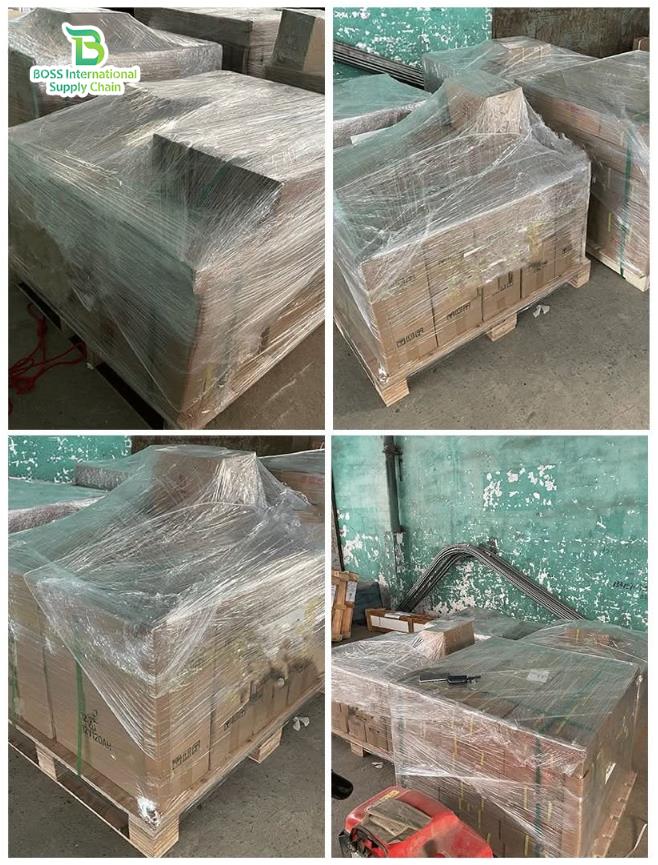
BOSS International was engaged to take full responsibility for the procurement and logistics process. The company identified qualified suppliers through its Guangzhou network, conducted on-site factory inspections, performed pre-shipment quality control, managed cargo consolidation and booking, and coordinated the entire ocean freight process. Upon arrival in Colombia, the Bogotá team handled customs clearance and arranged door-to-door delivery to the client's designated warehouse.
The results were significant: the retailer reported a 30% reduction in total procurement and communication costs compared to its previous fragmented approach. More importantly, the consistency of product quality improved markedly, as the integrated quality control process eliminated the gaps that had previously existed between separate vendors.
Why Capacity Matters
Beyond the organizational model, one practical differentiator deserves attention: carrier relationships. Securing container space on the Asia-Latin America trade lane is notoriously competitive, particularly during peak seasons when carriers routinely reallocate capacity to higher-yielding routes.
BOSS International maintains contracted capacity agreements with multiple major shipping lines, including ONE, CMA, COSCO, Maersk, and MSC. These agreements provide stable cabin space and negotiated freight rates on the China-Colombia route, even when the spot market tightens considerably. For importers whose business continuity depends on predictable lead times, this resource depth translates directly into operational stability.
Looking Ahead
As Colombia's import demand from China continues to grow, the companies that will thrive are not necessarily those that find the cheapest individual service, but those that build supply chain structures capable of absorbing complexity. The dual-market model — with integrated teams controlling both the origin and destination sides of the transaction — represents a meaningful evolution in how cross-border trade is executed.
For Colombian importers still navigating the challenges of sourcing from China, the lesson is becoming increasingly clear: the competitive advantage lies not in the product itself, but in the strength of the supply chain that delivers it.Visit www.bosslogistics.com.


Reposted for informational purposes only. Due to factors such as timeliness and policy, please refer to the sources mentioned in the content. If you have any questions, please contact us.



